

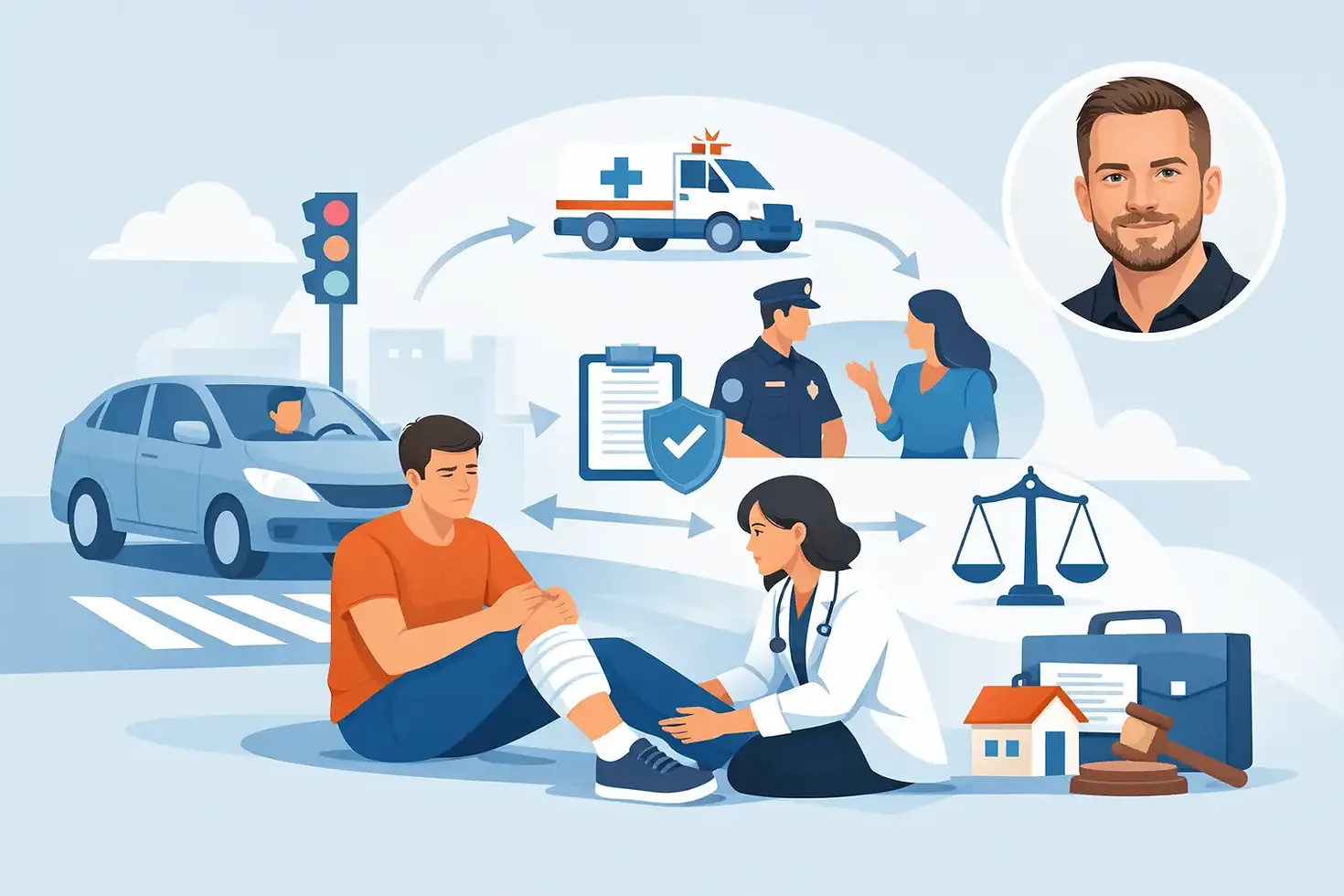
Best Steps After Pedestrian Accident Injuries
A pedestrian crash can turn an ordinary day into a medical, financial, and legal crisis in seconds. The best steps after pedestrian accident injuries are not complicated, but they do matter - especially when pain, shock, and insurance pressure start working against you.
Unlike many vehicle occupants, pedestrians do not have steel, airbags, or seatbelts protecting them. Even a crash at a relatively low speed can cause fractures, head trauma, spinal injuries, internal bleeding, or damage that gets worse over the next several hours. What you do immediately after the collision, and in the days that follow, can affect both your health and your ability to recover full compensation.
The best steps after pedestrian accident start with medical care
Your first priority is medical treatment. If you are still at the scene and able to respond, call 911 or ask someone nearby to do it. If emergency responders recommend transport to the hospital, take that recommendation seriously. Many serious injuries are not obvious in the first few minutes after impact.
Some people try to push through the pain because they are worried about ambulance costs or they believe they can "walk it off." That can be a costly mistake. A delay in treatment gives insurance companies room to argue that your injuries are minor or unrelated. It also puts your health at risk.
If you were not taken from the scene by ambulance, get evaluated as soon as possible. An urgent care visit may be enough in some situations, but if you hit your head, lost consciousness, have severe pain, dizziness, chest pain, abdominal pain, numbness, or trouble walking, emergency care is the safer choice.
Report the crash and make sure a record exists
If police respond, give clear and accurate information about what happened. Stick to the facts. Tell them where you were, what direction you were walking, what you saw, and where the vehicle came from. If you do not know an answer, say so. Guessing can create problems later.
Ask how to obtain the police report. That report may include the driver's identity, insurance information, witness names, and the responding officer's observations. It is not the final word on fault, but it often becomes an important starting point in a pedestrian injury claim.
If police do not come to the scene, report the incident as soon as you can. A missing report makes it easier for an at-fault driver or insurance carrier to dispute what happened.
Evidence disappears fast
Pedestrian accident cases often turn on details that can vanish within hours. If you can safely do so, take photos of the vehicle, your injuries, the intersection or roadway, crosswalk markings, traffic signals, skid marks, debris, weather conditions, and lighting. Torn clothing, broken shoes, blood on the pavement, and damage to personal items can all matter.
Witness information is just as important. Get names and phone numbers if possible. Neutral witnesses can be powerful when a driver later claims the pedestrian "came out of nowhere" or crossed improperly.
If there were nearby businesses, homes, buses, or traffic cameras, make note of them right away. Video footage may be erased quickly. The sooner that evidence is identified and preserved, the better.
Be careful what you say to the driver and the insurer
After a traumatic event, many injured people apologize out of reflex or try to be polite by minimizing what happened. Avoid that. Do not say the crash was your fault. Do not say you are "fine" if you have not been medically evaluated.
The same caution applies after the scene. The driver's insurance company may call quickly and sound helpful. Their goal is not to protect your claim. They may ask for a recorded statement, broad medical authorizations, or details designed to reduce what they have to pay.
You are generally not required to give the other side a recorded statement right away. In many cases, it is smarter to speak with a pedestrian accident attorney before discussing your injuries, your medical history, or how the crash happened.
Follow through with treatment
One of the best steps after pedestrian accident injuries is also one of the most overlooked: keep treating. Go to follow-up appointments. See specialists if you are referred. Complete physical therapy if it is prescribed. Tell your doctors about every symptom, even if it seems minor.
This is not just about paperwork. It is about recovery. Pedestrian crashes commonly cause soft tissue injuries, concussions, knee damage, back injuries, and psychological trauma that do not resolve on their own.
There is also a legal reality here. Gaps in treatment can be used against you. Insurance adjusters often argue that if you missed care, you must not have been seriously hurt. That is not always fair, especially when people miss treatment because they are overwhelmed or worried about cost, but it is a common tactic.
Keep a file from day one
Start gathering records early. Save hospital paperwork, prescriptions, discharge instructions, imaging results, bills, receipts, wage loss documentation, and any letters or emails from insurance companies. Photos of bruising, swelling, casts, stitches, and mobility aids can help show how the injury affected your daily life over time.
It also helps to keep a simple journal. Write down your pain levels, sleep problems, missed work, mobility issues, emotional distress, and activities you can no longer do. A case is not only about the initial impact. It is also about what the injury has taken from you in the weeks and months afterward.
Fault is not always as simple as the driver claims
Drivers and insurers often try to shift blame in pedestrian cases. They may say the pedestrian was outside a crosswalk, crossed against a signal, wore dark clothing, or was distracted. Sometimes those facts matter. Sometimes they do not tell the whole story.
A driver still has a duty to keep a proper lookout, control their speed, and avoid hitting people in or near the roadway. In Illinois, fault can be shared, which means a pedestrian may still have a claim even if the defense argues the pedestrian made a mistake. That is why early evidence, witness statements, and scene investigation are so important.
Every case depends on its facts. A crosswalk case with clear signal timing may look different from a nighttime roadway case. A child struck in a neighborhood raises different issues than an adult hit in a parking lot. What should stay constant is your focus on protecting the evidence before the other side shapes the story first.
Why legal help matters early
The strongest pedestrian injury claims are usually built early, not patched together months later. An attorney can help secure witness statements, demand video preservation, gather medical records, calculate lost income, identify all available insurance coverage, and handle insurer communication before damaging statements are made.
That matters because serious pedestrian injuries often involve more than an emergency room bill. There may be future treatment, surgery, rehabilitation, lost earning capacity, pain and suffering, and long-term limitations. A quick settlement offer rarely reflects the full value of those losses.
For families dealing with catastrophic injuries or a wrongful death, the stakes are even higher. Those cases require careful attention to evidence, timelines, damages, and the pressure tactics insurers use when they know a family is vulnerable.
The Law Office of Kevin P. Justen, PC represents injured people and families facing exactly these kinds of high-pressure situations, with the kind of direct, contingency-fee representation that lets clients focus on healing instead of fighting insurers alone.
Mistakes that can weaken a pedestrian injury claim
Some mistakes show up again and again. Waiting too long to get medical care is one. Failing to report the crash is another. Posting on social media can also cause damage, especially if photos or comments are taken out of context to suggest you are less injured than you say.
Settling too early is a major risk. Once you accept a release, you usually cannot go back for more money if your condition worsens. That is a serious problem in pedestrian cases, where the full extent of injury may not be clear right away.
Another mistake is assuming the insurance company will be reasonable if liability seems obvious. Sometimes they are not. Even clear cases can become difficult when damages are significant.
What to do in the first few days
If you are overwhelmed, focus on the next right move. Get medical care. Report the crash. Preserve photos and witness information. Avoid detailed insurer conversations. Keep every document. Then get legal guidance before the claim starts moving in the wrong direction.
That first week after a pedestrian accident can shape everything that follows. A careful start does not guarantee an easy case, but it does give you a stronger position when medical bills start arriving and the insurance company begins asking questions.
If you were hit while walking, you do not need to figure all of this out perfectly on your own. The right steps, taken early, can protect your health, your claim, and your ability to move forward with some measure of justice.


